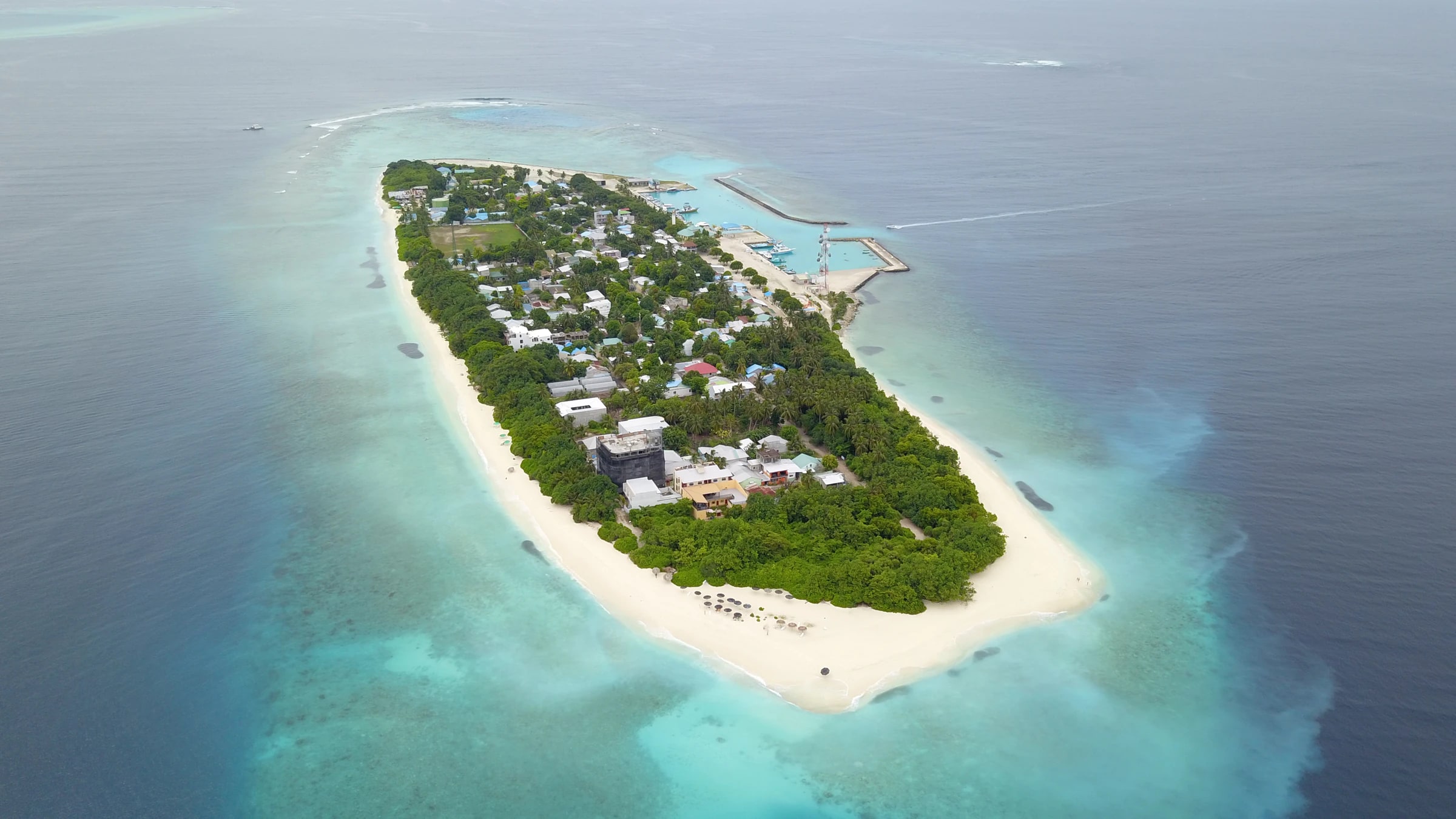
Almost every comparison of Maldivian local islands is written for someone visiting for three or four nights. It ranks islands on how quiet they feel, how good the beach looks, what there is to do and how long the boat takes. Those are reasonable questions for a short visit, and they are close to useless if you are bringing young children for a fortnight or longer.
Over ten nights, different things decide whether an island works. Can you buy what a child eats? What happens if that child gets ill at night? Can they walk around safely? Is the water somewhere a three-year-old can actually be? None of those appear in the comparisons that rank for this search.
This guide sets out the criteria that matter at that length of stay, shows what the official record can and cannot tell you about five commonly shortlisted islands, and is honest about which of them we know first-hand. If you are still deciding how long to go for, our guide to trip length comes first. If you want the general criteria for judging any island for a long stay, the month-plus island guide covers them.
Why do the usual comparisons stop working at ten nights?
Because they measure first impressions, and you are buying a routine.
A four-night visitor experiences an island as a set of highlights. A family staying a fortnight experiences it as a supply chain, a walk to the beach repeated twenty times, a shop that either has yoghurt or does not, and a health centre they hope not to need. The qualities that make an island photograph well are close to unrelated to the qualities that make it liveable with a five-year-old.
There is also a compounding effect. A shop with a thin selection is a novelty on day two and a problem by day nine. A twenty-minute walk to the only swimmable water is fine once and tiring by the tenth time with a toddler and a bag.
Which six things should actually decide it?
These, roughly in the order they will affect you.
- Grocery depth. Not whether shops exist, but whether they reliably stock what your family eats, and how supply reaches the island.
- Medical capability, measured against your stay length. A ten-night stay with a small child has a meaningfully higher chance of needing a doctor than a long weekend does.
- Water your children can be in. Depth at the shoreline, current, shade, and whether anyone is watching. Not how the beach looks.
- Whether children can move around. Island size, traffic, and whether other children are outside.
- Sleep. Not general island quietness, but whether your accommodation lets a family with a night-waking child function without worrying about the people next door.
- What the accommodation itself provides, because on a long stay this matters more than the island does. A kitchen, laundry and separate living space change a fortnight more than any island feature will.
Note what is missing from that list: nightlife, restaurant variety, snorkelling quality and how photogenic the beach is. Those are genuinely worth caring about on a short trip. They are not what decides a fortnight with children.
What can official sources actually tell you about these islands?
Less than you would hope, and the gaps are worth knowing before you trust anything you read.
Size is reliable. These are citation-backed figures, and they carry more information than they look like they do. Ukulhas is about 1.03 km by 0.23 km. Dhigurah is long and narrow at about 3.18 km by 0.28 km. Thoddoo is the wide one, about 1.68 km by 1.20 km. Rasdhoo is the smallest at about 0.58 km by 0.40 km. Maafushi is about 1.28 km by 0.26 km and is by far the most densely populated of the five.
Shape matters with children. A long thin island means the walk from your accommodation to the water depends heavily on where you are staying. A compact one means it usually does not.
Population figures are not reliable, but the order is. For three of these five islands, the census figure, the atoll-level figure and the island council's own published figure disagree with each other, so we are not going to print numbers that we cannot stand behind. What is consistent across sources is the ranking. From most to least populated: Maafushi by a wide margin, then Thoddoo, then Rasdhoo, then Dhigurah and Ukulhas.
That ordering is worth more to you than the numbers would be, but read it for what it is: a measure of how many people live somewhere, not of how noisy or busy it feels. A smaller island may have more visitors per resident, and a larger one may be quieter where you are staying. If you want the widest choice of places to eat and the most going on, population points one way; if you want to be among a few hundred people rather than a few thousand, it points the other. Anything beyond that you should ask a host directly.
Health facilities are officially registered, and the register has three limitations you must know. The Ministry of Health lists a health centre on Ukulhas, Thoddoo, Dhigurah and Maafushi, and an atoll hospital in Alif Alif. Each carries a grade label. But the ministry publishes no definition of what those grades mean and no stated ordering between them, the register has no column giving each facility's island, and its staffing column is not populated. So the register tells you a facility exists and is licensed. It does not provide enough information for a reliable comparison of medical care between these islands. Ask each island's accommodation what its health centre actually does.
Two time-sensitive things. Thoddoo's health facility has been the subject of a publicly announced upgrade, so its position may change; check it rather than relying on this page. And Ukulhas has a further land reclamation announced, which is a reminder that these are working communities rather than fixed scenery.
One correction worth making, because it appears constantly in travel writing about this region. Ukulhas sits in Alif Alif, North Ari. The whale shark aggregation people associate with "Ari Atoll" is in South Ari, a different administrative atoll, and it is about 83 km from Ukulhas — further away than Malé is. If whale sharks are the reason you are choosing an island, that reason points somewhere else.
What we know first-hand, and what we do not
We run a house on Ukulhas. That is the island we can describe from experience, and the four others we cannot.
We are saying this plainly because the alternative is what most comparison pages do, which is to write about five islands with the same confidence while having stayed on one or none. Below, the Ukulhas section is first-hand. For the others, we have given you the criteria and the official record and we would rather you asked their hosts directly than took our word for something we have not seen.
How does Ukulhas hold up against those six criteria?
Honestly, and with the weak points named.
Groceries. Shops reliably stock nappies and wipes and all the major everyday items. Formula and baby food should be brought with you. Supplies arrive by boat roughly twice a week, so what is on the shelves moves through the week, which matters if you are planning to cook for a family.
Medical. The island's health centre operates 24 hours, with a doctor present daily and a pharmacy stocking basic medicines. More serious cases may require referral or transfer off-island. That is the real picture, and it is more than we can tell you about the other four.
Water. The nearest beach is about a minute's walk along the main lane. The designated bikini beach is about five minutes, two lanes over, and has shade from low bushes and small trees. The water is shallow and calm at the shoreline and suitable for small children, except in rough weather and at high tide, deepening to roughly four to ten metres over the house reef. There is no lifeguard service on Ukulhas. Nobody is watching your children but you.
Distances, which is the thing that compounds. Ukulhas is small enough that almost everything a family needs is a few minutes on foot: about a minute to the nearest beach, about five to the designated bikini beach, and the shops, restaurants, harbour and health centre all walkable. Over a fortnight that is a structural difference rather than a convenience, because every one of those walks happens twenty times, with a child, often carrying something.
Moving around. Local children commonly move around the island independently, and visiting families often find their children have more freedom here than at home. That is an observation, not a safety guarantee, and supervision remains a parent's own decision.
Sleep. This is an accommodation question rather than an island one, and it is the reason our guide to a fortnight with young children exists.
The honest weak points. The island is busiest from December through March. Mosquitoes are most noticeable during the rainy season. Shops and restaurants may close for a period on Friday for prayer, which matters if you are relying on eating out.
What a day here actually involves — the beach routine, feeding a child, the heat in the middle of the day, and what is genuinely harder than a resort — is the subject of a separate guide, and it is the right place to judge whether this island suits your family.
What should you ask about the island you are considering?
Put these to any host, on any island, and compare the answers rather than the marketing.
- What do the shops reliably stock, and what should we bring? How often does supply arrive?
- Is a doctor on the island every day, and what happens at night?
- How far is swimmable water from your property, and how deep does it get? Is there shade? Is anyone supervising it?
- How far out is the reef, and can a child reach it from the beach? Islands differ enormously here, and a wide shallow lagoon between the shore and the reef edge changes what snorkelling with children actually involves. Ask for the distance rather than a description.
- How far is the walk from your property to the beach, the shops and the harbour? Ask in minutes, and remember you will make each of those walks many times.
- Can children walk around safely, and is there anywhere they cannot go?
- Is any part of the accommodation shared with other guests?
- Is there a kitchen we can use, and a washing machine?
The last two are not island questions at all, which is the point. Over a fortnight, what the building does for your family will matter more than which island it sits on. Our comparison of hotel rooms against a private home works that through, and the self-catering guide covers what cooking for yourselves actually involves here.
Which island suits which family?
We are not going to tell you, and you should be wary of any page that does.
What we can say is which questions separate them, and that the answers change with the length of your stay. A short trip can absorb a thin shop and a long walk to the water. A fortnight cannot. An island that suits a diving couple for five nights may be the wrong choice entirely for a family of five staying three weeks.
If you have decided on Ukulhas, or you want to know what a longer stay here actually involves, read more about the island and then send us your dates and the ages of your children. We will tell you honestly whether it suits your family, including when it does not.